3 Steps for Creating a Beautiful Farewell
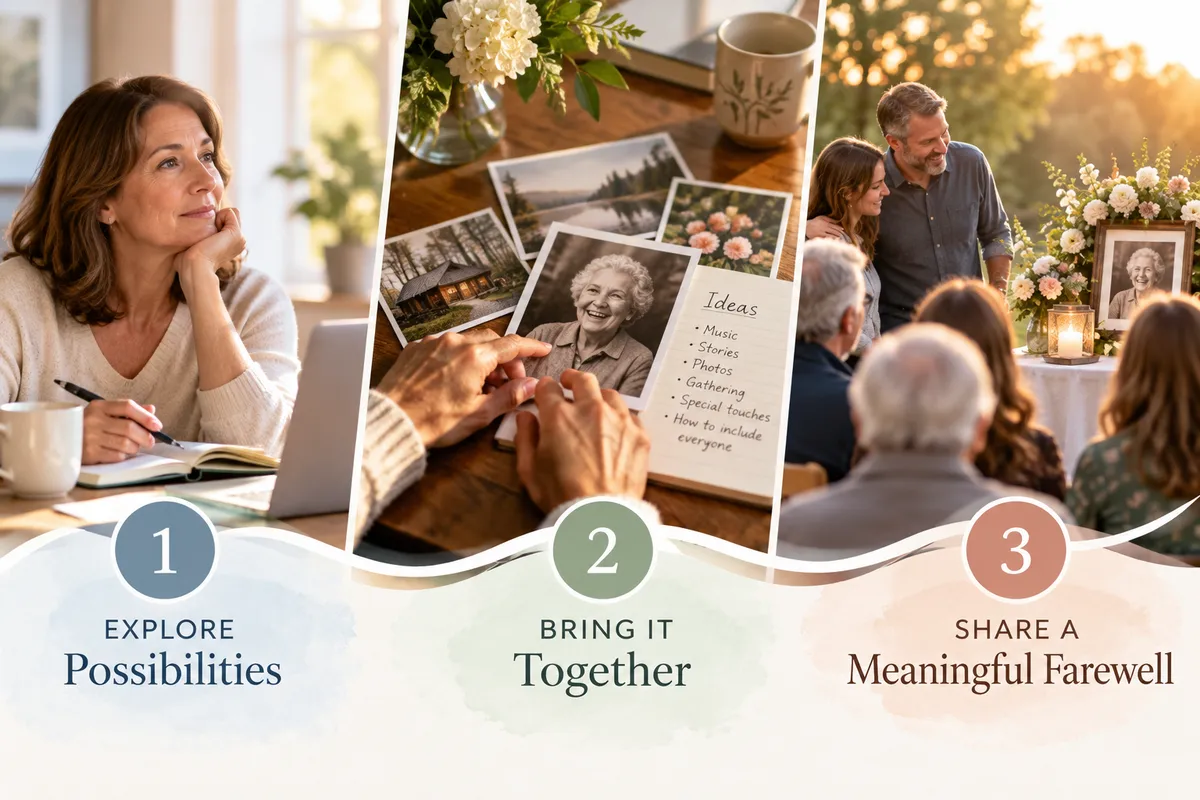
TL;DR: A beautiful farewell comes down to three steps. First, figure out who your loved one really was and sum it up in one sentence. Second, let that sentence make your decisions, keeping only what honors who they were. Third, hand off the details of the day so your family can simply be there. These steps work whether someone you love has just died or you know that time is coming. Your family can follow them on their own, or a Farewell Guide can lead you through them. Either way, most families work with a licensed funeral home for the legal steps and the care of their loved one.
If someone you love has died, the questions come fast. Burial or cremation? Which funeral home? What kind of service? Who speaks, and what do they say? Most people have never planned a funeral before, and nobody hands you instructions.
If someone you love is nearing the end of life, the same questions may already be sitting in the back of your mind, waiting for a moment that never feels right.
Either way, if you feel lost, that is normal. Under all the questions, most families carry the same fear. They are afraid of getting it wrong. They want the goodbye to feel like the person they love, and they don't know how to make that happen.
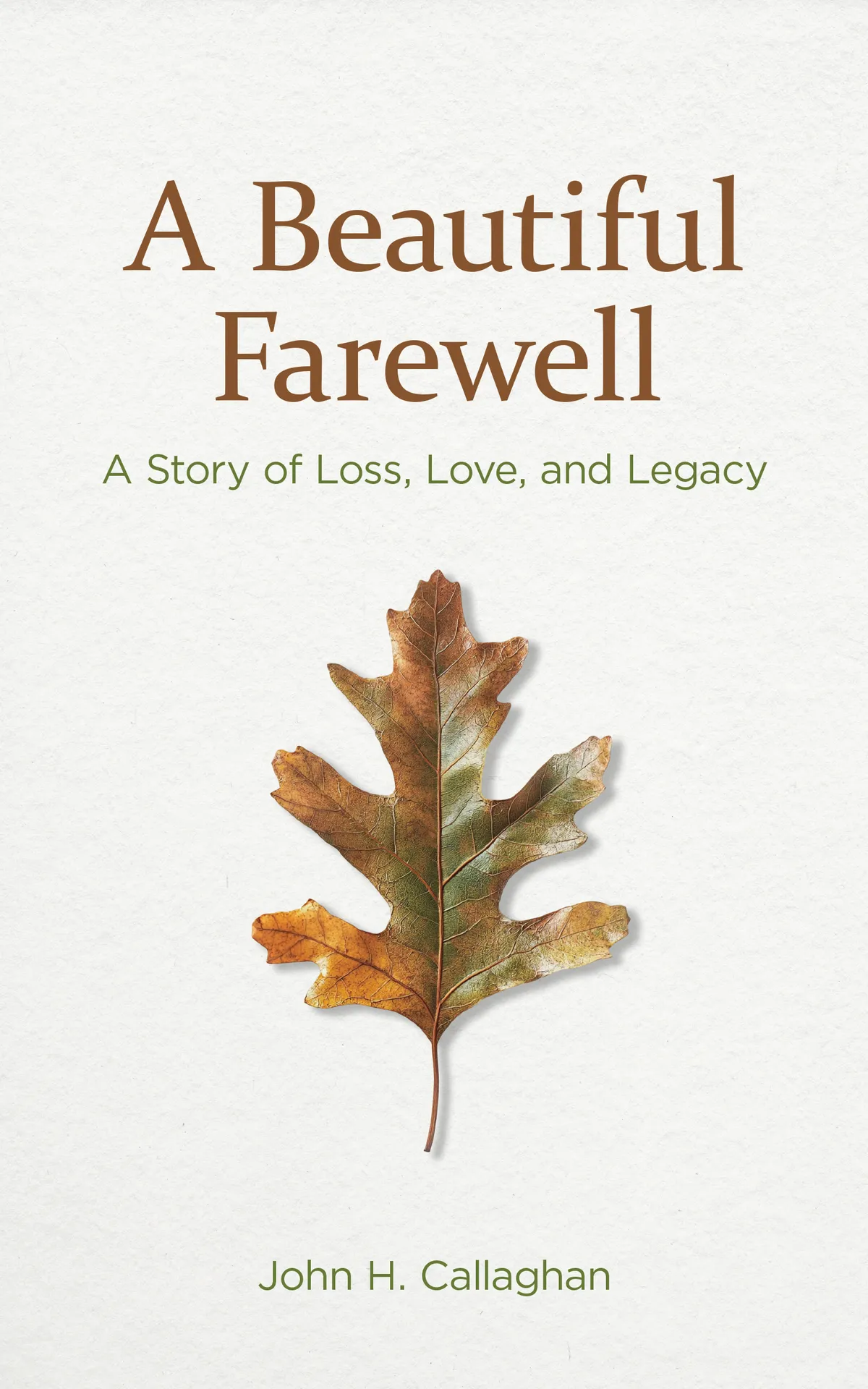
The good news is that the answer is simpler than it looks. A meaningful farewell doesn't come from picking the right package or the most expensive flowers. It comes from knowing who the person really was and letting that shape everything else. The three steps below come from the book A Beautiful Farewell by John H. Callaghan, which follows one family as they plan a farewell for their mother. We'll say "she" here for that reason.
If you have days, or if you have time
If a death has just happened, the service may be only a few days away, and everything below can feel like too much. It isn't. Step 1 can happen in a single evening. Stories from friends can keep arriving after the service, and they'll still matter. If time is short, getting the sentence right matters more than doing everything perfectly.
If your loved one is still living, you have something families planning after a death don't: the person themselves. If they're willing, they can sit at the table for Step 1 and tell you in their own words what mattered to them. You'll also have time to compare funeral homes, ask questions calmly, and make decisions without the pressure of a deadline. For ways to start that conversation, see Five Questions to Ask While You Still Can and Dad Says He Doesn't Want a Funeral. What Does He Mean?
What the funeral home handles, and what belongs to you
Most families work with a licensed funeral home to care for their loved one's body, file the death certificate, get permits, and carry out the burial or cremation. In some states, that's required. What belongs to your family is the farewell itself: the gathering, the stories, the words, and the way people remember the one you lost.
A Farewell Guide is a funeral professional who leads families through the three steps below. The guide asks the questions, helps you see what your answers have in common, drafts the obituary, and handles the details of the day. If you're talking with funeral homes, ask whether they have someone who starts by asking who your loved one was, not which casket you want.
Step 1: Figure Out Who She Really Was
Everything starts here. Before you choose a place, a song, or a casket, you need to put into words what made this person who she was. The goal is one sentence that everyone who knew her would agree with.
On your own
Gather the people who were closest to her around a kitchen table. Bring a dozen photos. Pick one person to write down what everyone says, somewhere the whole group can see it.
Then talk through five questions, slowly. Who was she, really? What did she love? What did she believe about how to live a good life? Tell about a time she faced something hard. Tell about a time she helped someone through something hard. Pay attention to the words that keep coming up. Those words matter.
Next, try to sum her up in one sentence. Then test it. Would everyone who knew her read it and say, "Yes, that was her"? If someone hesitates, keep working until it feels right. When it does, write it down and put it where the whole family can see it.
Finally, reach out to people who knew her from different parts of her life. A short text works well: "We're gathering memories of Mom for her farewell. Would you share one story that captures who she was?" Save every story that comes back. If the stories keep matching your sentence, you got it right. If they keep showing something you missed, add it.
If she is still with you and open to it, ask her the same five questions. Her answers may surprise you, and they will settle a lot of disagreements before they start.
With a Farewell Guide
Your guide will sit down with your family, often at your own kitchen table, and open with a simple question: "Who was she?" The guide writes down the words that keep coming up and helps you shape them into that one sentence. They don't invent anything. They help you organize what you already know, and afterward they'll send you prompts for gathering stories from friends and family.
Step 2: Let That Sentence Make Your Decisions
From here on, every choice comes down to one question. Does this honor who she actually was? If it doesn't, you leave it out.
On your own
Without a guide, that one question becomes your family's referee. It's especially helpful when family members disagree. One person wants a formal service. Another wants a big party. Instead of arguing over whose idea is better, look at your sentence and ask which idea fits her. Most of the time, the answer is clear, and nobody has to lose.
Use the same question to choose the place, the size, and the feel of the gathering. Pick three or four stories to share out loud, and decide who will tell each one. Write the obituary around who she was, not just the dates and places of her life.
Then think about one small thing guests can take home and keep using. In A Beautiful Farewell, a woman who tended an herb garden every day for years was honored with small herb plants for every guest. Each person who planted one would think of her whenever they watered it. Your keepsake might be a recipe card, a packet of seeds, or something else that fits the person you love.
Last, spend money only on things that carry meaning. If something is there only because "that's what people do," you can leave it out. Funeral homes are required by federal rules to give you an itemized price list, and in most cases you can choose only the items you want. If you have time before a death, use it to compare those lists without pressure.
With a Farewell Guide
Your guide will walk you through options for the setting, the size, and the feel of the gathering, suggest rituals and keepsakes that fit, and draft an obituary built around who she was. When family members disagree, a good guide will point everyone back to the sentence instead of picking a side.
Step 3: Hand Off the Details So You Can Be There
This step matters more than most families expect. If you are busy arranging chairs and checking on the food, you will miss your own goodbye.
On your own
This is the step families skip most often when they plan alone. So choose one person to run the day. It should be someone capable who cared about her, but who is not one of the people grieving the hardest. A close friend, a cousin, or a trusted neighbor works well. Give them a written schedule, a list of who speaks and when, and permission to make decisions without asking you. Then let go.
If you have time before a death, ask that person now. It's one less decision to make in the hardest week.
Your own job that day should be short enough to fit on an index card. Tell your story. Say goodbye. Take care of each other. If something goes wrong with the timing or the food, that belongs to the person running the day, not to you.
With a Farewell Guide
This is where a guide makes the biggest difference. Their team sets up the space, runs the schedule, and adjusts on the spot if a moment runs long or something goes wrong. You get to arrive as family, not as the event planner.
After the Farewell, and Why It's Never Too Late
The service ends, but the farewell doesn't have to. Keep the keepsakes where you can see them. Cook her recipes. Tell her stories to the kids. Small, steady acts like these are how people stay with us.
Maybe you are reading this with some regret. Maybe someone you loved got a quick, generic service years ago, and it never felt like them. You can still honor them. Use the same three steps. Gather the people who knew them, find the sentence, collect the stories, and hold a simple gathering. A backyard, a church hall, or a living room is enough. A Farewell Guide can help with a tribute like this too, years after a death.
As the book puts it, the best time to honor someone is when they die. The second best time is whenever you're ready.
This post is adapted from A Beautiful Farewell: A Story of Loss, Love, and Legacy by John H. Callaghan. To read more stories like this one, visit BeautifulFarewell.org.