A Place to Remember: Alternatives to a Traditional Gravesite
There is a closet in a lot of American homes with an urn on the top shelf. It has been there for three years, sometimes ten. Nobody meant for it to stay there. The family was going to decide what to do, and then life got busy, and then deciding started to feel harder than not deciding.
Choosing cremation is often the start of a decision, not the end of one. A permanent place to remember someone can matter more than families expect, especially for the generation that comes after. Here are some of the options that do not involve a traditional gravesite.
A cremation garden
Many cemeteries have landscaped gardens set aside for cremated remains, with walking paths, benches, and shared or individual markers. A cremation garden offers a quiet, beautiful place to visit, often at a lower cost than a traditional plot.
A columbarium niche
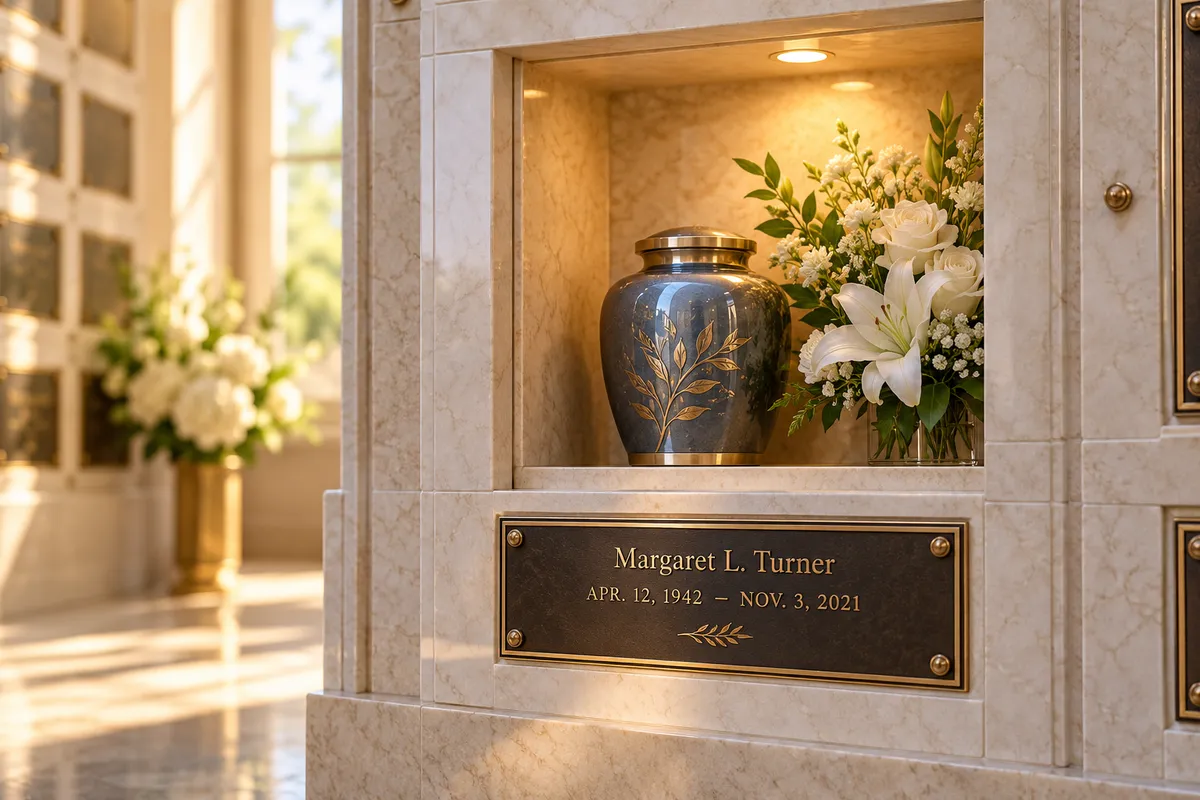
A niche in a columbarium holds an urn behind a nameplate, in a cemetery, a church, or a memorial chapel. Some niches have glass fronts so families can include a photo or small keepsake. A columbarium is especially convenient for families who want a place to visit that is sheltered and easy to reach.
A natural burial ground
Cremated remains can often be buried in natural burial areas, where the land is preserved and the grave may be marked by a native plant, a flat stone, or recorded GPS coordinates rather than a headstone. For someone who loved the outdoors, this can feel exactly right.
A scattering garden
Some cemeteries offer designated areas for scattering, with a memorial wall or plaque where the name can be recorded. This gives families the feeling of scattering along with the reassurance of a place to return to.
A meaningful place where scattering is allowed
A lake, a trail, a family farm, a favorite beach. Scattering in a place the person loved can be one of the most personal farewells there is. Rules differ depending on whether the land is private, public, or at sea, so it is worth getting guidance first. Some families also mark the spot with a photo and coordinates so future generations can find it.
A memorial bench
Many parks, trails, and cemeteries have programs that allow families to dedicate a bench with a small plaque. A bench is a place to sit, and it invites the people who loved someone to stay a while. It works whether the remains are nearby, scattered, or somewhere else entirely.
A memorial tree
Some cemeteries and memorial forests offer tree plantings, sometimes using biodegradable urns designed to be planted with a sapling. Even without the remains, a tree planted in someone's memory gives the family a living place that changes with the seasons and grows over time.
Joining a family plot
Many cemeteries allow cremated remains to be placed in a plot where a spouse, parent, or other relative is already buried. It is worth asking, because it can bring a family together in one place at modest cost.
Shared keepsakes
When family members live in different states or feel differently about what should happen, some divide the remains among small keepsake urns or memorial jewelry. Often a portion is placed in a permanent location as well, so there is still one place where everyone can come together.
A marker without remains
Some families scatter remains and still place a marker, plaque, or stone in a cemetery or garden. It serves as an address for grief, even when the person is not physically there.
Help sorting through it
Every one of these options comes with practical questions. What does it cost? Who needs to give permission? How long does it take? Does a cemetery allow it? What happens if the family moves away? A funeral team works through these questions regularly and can explain what is available locally, what the rules are, and what each choice involves. Their help can mean the difference between a decision made thoughtfully and an urn that sits on a closet shelf for another decade.
Your next step
Ask the funeral team in your area which of these memorial options are available near you and what each one involves.