How to Preserve Your Parent’s Stories and Voice
You probably know the stories your parent always tells. You might even know when the punch line is coming. What fades over time is not the story but the sound of it: the pause before the punch line, the laugh, the way they say your name. A recording keeps what memory can’t.
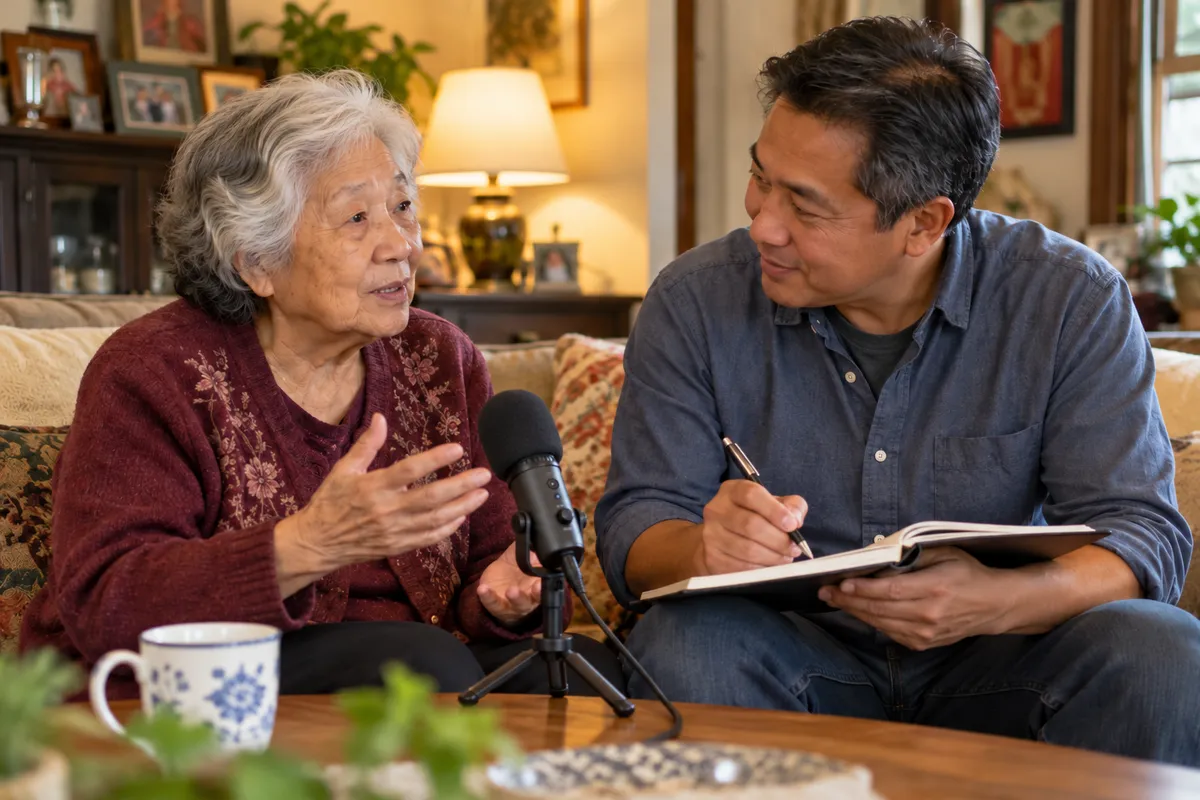
You don’t need professional recording equipment or a big family-history project. A phone, a comfortable chair, and genuine curiosity are enough to begin.
Start with the easy stories
Ask for stories that make your parent smile. Their first job. A childhood friend. The car they drove when they were young. The day they met someone important. Familiar topics help a conversation feel natural rather than like an interview.
One good prompt is: “Tell me about a day you wish you could live again.” Another is: “What’s a story the grandchildren should know?” Follow the answer instead of rushing down a list.
Record with their permission
Ask before recording audio or video. Explain who might hear it and where you intend to keep it, and ask which stories they are happy to share beyond the family. Some people love being filmed; others feel more at ease with audio only. If they prefer not to record, write down the story afterward in their own words.
For a simple phone recording, sit close enough for the microphone to hear both voices, turn off the television, and put the phone on Do Not Disturb so a call doesn’t interrupt. Record a short test. Five clear minutes are more useful than an hour of muffled sound. When the conversation seems finished, leave the recording running for a while. People relax once they think the interview is over, and the best story often comes after “well, that’s about it.”
Capture the voice, not just the stories
Some of the most treasured recordings are short. Ask your parent to say the phrase they always say, read a favorite recipe aloud, sing a line of a song they love, or simply say your name and the names of the grandchildren. These take a minute and can mean more than an hour of interview.
Before you delete anything, check your phone. Old voicemails and video clips are often the only recordings a family has, and they are easy to lose when a phone is replaced.
Preserve everyday details
Big life milestones matter, but ordinary details can become the most precious. Ask how they made a favorite recipe, which song always takes them back, how they celebrated holidays, how they spent a Saturday when they were young, or what they bought with their first paycheck.
Photographs can spark memories. Choose three to five pictures and ask who was there, what happened just before the photo, and what came next. Don’t worry about putting events in perfect order.
For more ways to open a conversation, see Five Questions to Ask While You Still Can.
Include the next generation
A grandchild might ask questions an adult never thinks of: “Were you ever scared at school?” “Did you get in trouble?” “What did you do for fun?” Let different family members take turns, and keep the atmosphere relaxed.
Keep the memories accessible
Give recordings filenames that explain what they contain, such as “Dad_Childhood_Stories_2026-10.” Save copies in two places, such as on your phone and in a cloud account or on a computer, and tell a trusted family member where to find them.
Don’t let the goal of creating a perfect archive get in the way of spending time together. The recording matters. But the afternoon you spent asking matters too, and your parent will remember that part.
One small step today: Ask permission to record one favorite family story this week.