
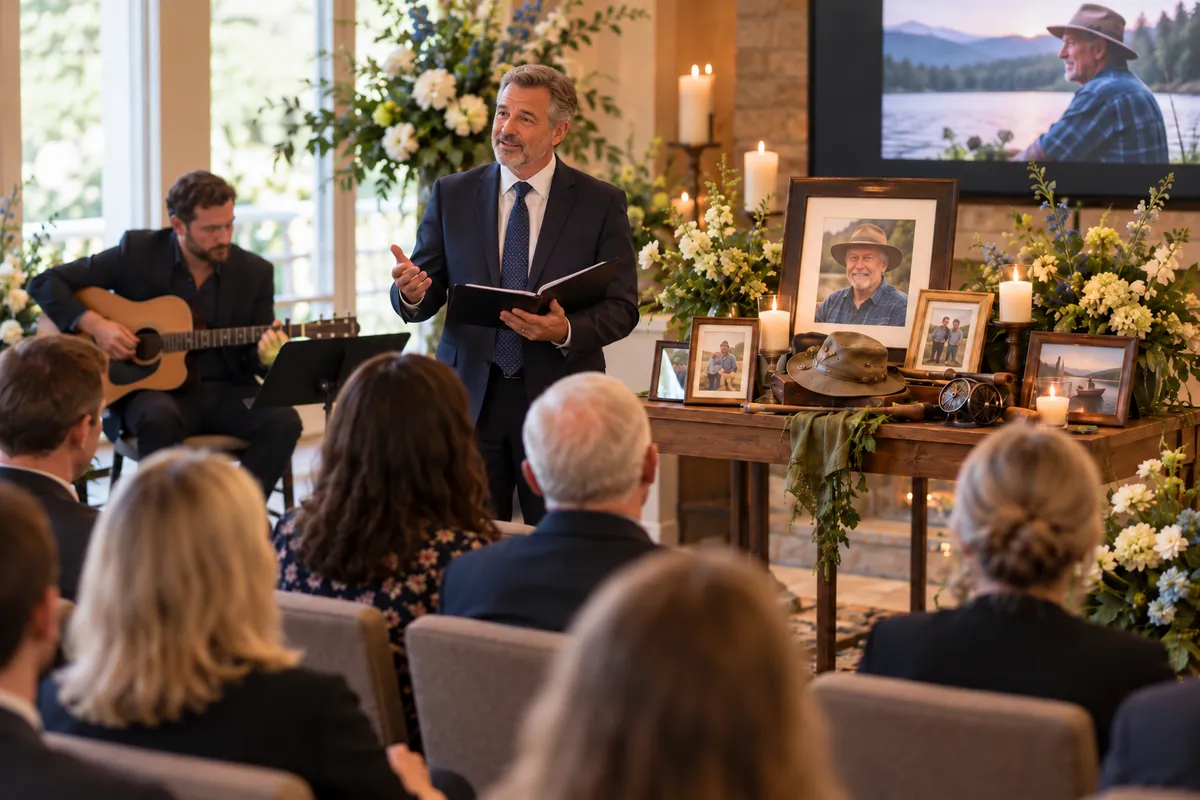
Ten Ways to Make a Farewell Ceremony Personal
Most of us have sat through a farewell where you could have swapped in a different name and nobody would have noticed. The words were kind. The music was pleasant. And when it ended, you knew no more about the person than when you walked in.
A personal ceremony does not require a big budget or a dramatic idea. It requires choices made because of who this person was. Here are ten that families use, along with a word about how they fit together.
1. Their music, including the song that makes everyone laugh
Play the songs they actually loved, even if those songs were not written with funerals in mind. If he sang Johnny Cash off key every morning in the shower, that belongs in the ceremony. Many families include one song that gets a knowing laugh from the room. That laugh is a gift, not a disruption.
2. Shared stories, with a plan
An open microphone can be wonderful, or it can turn into forty minutes of an uncle who does not know when to stop. The best approach is to invite three or four people ahead of time to share one story each, with a time limit, and then give the room a short chance to add a memory or two. Someone needs to be in charge of the timing, gently.
3. A letter read aloud
A grandchild, a spouse, or a lifelong friend writes a letter to the person who died and reads it during the ceremony. Letters tend to be more direct than eulogies. People say things in a letter that they would never say in a speech.
4. Candle lighting
Family members or guests light candles in memory, sometimes one for each chapter of the person's life or one for each person who wants to say a private goodbye. The flickering light and the slow pace give the room a moment of stillness that words often cannot.
5. A meaningful object
A fishing hat, a set of car keys, a well-worn Bible, a gardening trowel. Place it where everyone can see it, or pass it hand to hand while someone speaks. People remember the objects at a ceremony long after they forget most of the words.
6. A ritual everyone joins
Ask each guest to place a flower in a vase, a stone in a bowl, or a written note in a box as they arrive or as they leave. Participation matters. It turns a room full of observers into a room full of people saying goodbye together.
7. A reading that isn't scripture
For some families a passage from scripture is exactly right. For others, the most meaningful reading might be a poem, a passage from their favorite novel, a handwritten recipe, a letter they once wrote, or even a text message they sent that perfectly captured who they were. If they wrote something themselves, consider reading it.
8. Photos and video, timed with music
A photo tribute works best when it is short, carefully ordered, and set to a song that meant something to them. Five minutes is usually plenty. Longer than that and the room begins to look at their watches, which is no tribute to anyone.
9. A moment of silence with sound
Silence does not have to be empty. Some families hold a minute of quiet while a recording plays: the ocean they loved, birdsong from the backyard, the sound of a train if they spent forty years on the railroad. Let people sit with it.
10. A closing they would have chosen
How a ceremony ends shapes how people walk out. A standing ovation for a performer. A final toast for someone who loved a good party. A last radio call for a dispatcher or a pilot. A favorite saying repeated by the whole room. The ending is the last thing people take with them, so it is worth choosing deliberately.
Why it helps to have someone weave it together
Here is the catch. Ten good ideas can easily become a ceremony that feels like a variety show. Too many speakers, too many songs, too many moments that each make sense on their own but do not add up to anything.
This is where a Celebrant earns their place. A Celebrant listens to the family, chooses what fits, sets aside what does not, and puts the remaining pieces in an order that builds toward something. They make sure the funny story comes before the hard moment, not after. They help nervous speakers say what they mean in three minutes instead of fifteen. And on the day itself, they lead the room through it so the family can simply be there.
The goal is not a ceremony with more personal touches. The goal is a ceremony that feels like one honest portrait of a life.
Your next step
When you meet with a funeral team or a Celebrant, bring a few of these ideas with you and ask how they would bring them together into one ceremony.