
Where We Go to Remember Her - The Disagreement
The family in this story is a composite, drawn from the kinds of choices funeral teams help families make every week.
Joan spent every summer of her adult life at the same lake. She swam there before breakfast until she was seventy-five. She taught her children to fish off the same dock, and then her grandchildren. When she died at seventy-seven, nobody in the family doubted she should be cremated. She had said so many times, usually while cleaning fish.
What came after cremation was another matter.
The disagreement
Her daughter Beth wanted to scatter Joan's ashes at the lake. "That was her place," she said. "Where else would she be?"
Her son Tom wanted to keep them. He lived three states away and could get to the lake maybe once a year. The idea of having nothing to visit, nothing in his own house, felt like losing his mother twice.
They were both right, which made it worse. For several weeks the urn stayed at Beth's house while they avoided the subject.
The conversation that helped
Beth eventually called the funeral director who had handled the arrangements and asked, a little embarrassed, whether families ever got stuck like this. He told her it happened all the time, and asked if they would both be willing to sit down and talk through the options together, Tom by video call.
In that conversation, he explained something neither of them had considered. They did not have to choose one answer. A portion of Joan's ashes could be scattered at the lake, a portion could be placed in small keepsake urns, and the family could create a permanent place to visit at the lake even after scattering.
He also explained the practical side. The lake sat inside a state park, and the park had rules about scattering, which he walked them through. The park also had a memorial bench program, with plaques placed along the shoreline trail.
What they chose
On a morning in late June, the family went out in two boats to the cove where Joan had swum every day. Beth scattered a portion of her ashes there, and her grandchildren dropped wildflowers on the water afterward. Nobody gave a speech. Joan would not have wanted one before breakfast.
Tom took home a keepsake urn. So did Beth's oldest daughter, who was about to move to Oregon.
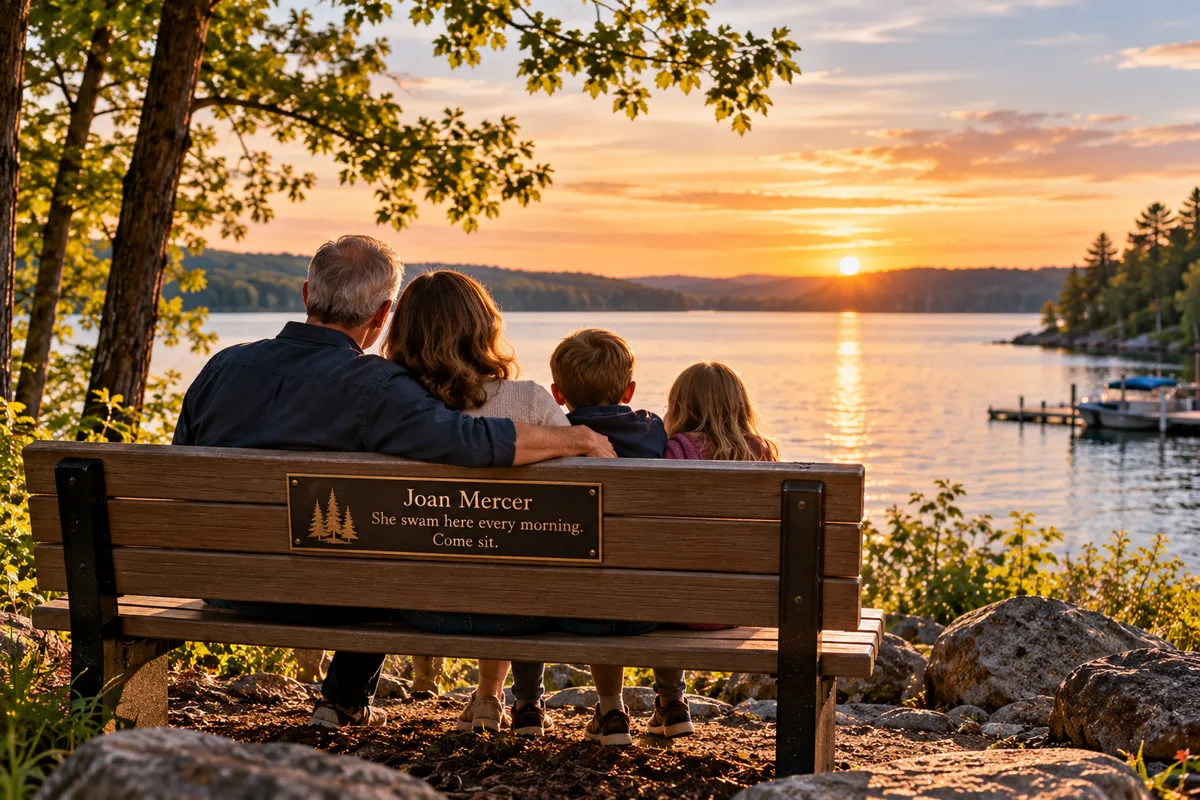
And in the fall, a bench went in along the trail above the cove with a small plaque: Joan Mercer. She swam here every morning. Come sit.
The first anniversary
A year after Joan died, the family gathered at the bench. Tom flew in. Somebody brought a thermos of coffee, strong and black, because that was how she drank it. They sat on the bench and the rocks around it and told stories for two hours. Then the grandchildren went swimming.
It was not a formal event, but it had help. When Beth mentioned she was thinking about a small anniversary gathering, the funeral team offered a few ideas and reminded her about the park's permit for groups. Many funeral teams stay in touch with families in the months after a death, and some help organize remembrance gatherings like this one.
Grief needs an address
Here is what the family learned. It is possible to scatter someone and still have a place to go. It is possible for a family to disagree and still find an answer that honors everyone. And a place to remember is not really for the person who died. It is for the people who keep living.
Last summer, Beth's youngest grandson, who was four when Joan died, asked if they could go to "Grandma's bench" before they went swimming. He barely remembers her. He knows exactly where she is.
Your next step
Ask the funeral team in your area how they help families choose a lasting place to remember, and what support they offer in the months after a farewell.